
Strive
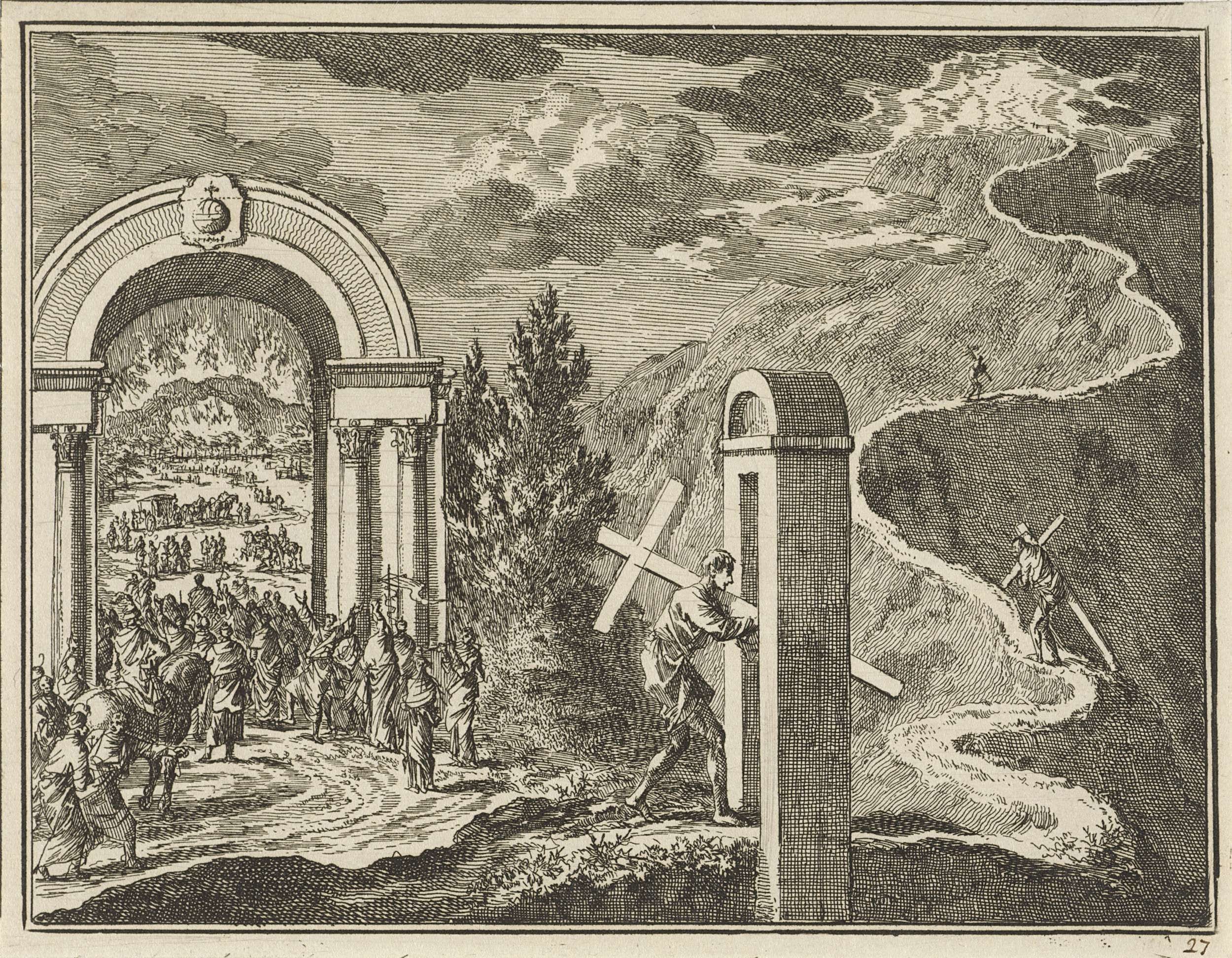
Jesus widens the road but narrows the gate. He invites everyone to the banquet but locks the door. What exactly is going on here?

A homily for the 21st Sunday in Ordinary Time (C)
Are you saved?
Catholics don’t tend to like that question. An evangelical might say “I have accepted Jesus as my Lord and Savior. I am saved. I am heaven-bound. Are you, brother?”
Jesus is absolutely my Lord and Savior, and I certainly hope I am saved, but Catholics don’t like to presume. My road to salvation has a lot of orange traffic cones and Work-in-Progress signs.
So in those moments when I’m asked Am I saved?, I remember St. Paul, and say that every day I work out my salvation with fear trembling. People who ask questions about your soul don’t tend to like that answer. It sounds like … works, and they insist we are saved by the grace of God through faith alone. But Jesus tells us today that’s just not true. He says it to people who think they’re saved just because of who they are, and Jesus is about to turn that all upside down and inside out.
Something strange happens in today’s gospel. It’s a kind of paradox, something that seems to be a contradiction. Paradox is one of the ways we express a God who is all things: a lion and lamb, a thunderclap and a still small voice, three persons yet one, fully God and fully man. There are endless examples: to truly live we must die, there can be joy in suffering, strength in weakness, and perhaps the most famous we heard today: the last shall be first, and the first shall be last.
Today Jesus widens the road but narrows the gate. He invites everyone to the banquet but locks the door. What exactly is going on here?
Well, let’s look at the first reading. It’s almost an exact parallel of the gospel reading. In Isaiah, God says “I know their works and their thoughts.” That goes right to the heart of what Jesus says. He knows what we claim to believe, but also knows how we live out that faith, and he knows those two things don’t always line up.
In Isaiah, we heard that God comes to “gather nations of every language,” while Jesus says people will come from the north and the south and the east and the west.
This is where it gets interesting. When Isaiah writes that “they shall come and see my glory,” it means everyone will see God himself, and God “will set a sign among them.”
Does that sound familiar to anyone? Back in chapter 7 of Isaiah, God told us what that “sign” would be. “Behold, the virgin shall conceive and bear a son, and shall call his name Immanuel.”
So in the Old Testament today we heard God promise a few things: he will gather the people of every language, he will give them a sign, and that sign will reveal his glory.
And then in Luke, it’s all fulfilled because the sign is Jesus, and he tells us about salvation, the glory of the Lord, and people being called from all over the world. And he compares it to a banquet where everyone is invited, but not everyone is let in.
Okay, so all that may be very interesting, but what it does it mean for us? Why invite us if you’re not letting us in? He’s talking about heaven and hell. Eternal salvation or eternal damnation. An everlasting feast at the table of the Lord or wailing and the grinding of teeth. His followers ask how many will be saved.
Why are they asking this question? Because they want some idea about the population numbers in heaven and hell. They want to know how hard it is to be saved, so they can choose how much or how little they need to follow Christ in order to stay out of hell. Minimum daily requirement Christianity.
It’s like when I was in school and the teacher was going over something, and I would raise my hand and ask: will this be on the test? I’ve actually had this conversation with people. They thought they were doing just enough to stay out of hell. And just enough, isn’t enough.
Jesus doesn’t answer their question. Instead he tells them about the narrow gate and the excluded guests to show that the task is meant to be difficult. And he gives them one word which we should take home with us today, and maybe think about this week. That word is strive.
Strive to enter the narrow gate. Work at it. A narrow gate is harder to get into, and we certainly can’t carry all our stuff through it, whether it’s our material goods or our attachments to the world. If we are to enter the kingdom it will be through God’s grace, but we have to do our part. We have to respond to that grace. We have to get up every morning, and work at it. We have to strive.
Following Jesus isn’t just a matter of being on the road with him. His grace calls us to that road with him, but we have to walk it ourselves.
He doesn’t leave us alone to the task: he provides food for the journey. He strengthens us with his own flesh at the eucharistic banquet. And we’re all invited and admitted here on earth as a foretaste of the feast in heaven.
The modern world makes a lot of things easier, and that’s great, but following Christ isn’t one of them. We need to strive. In the words of a famous poem: to strive, to seek, to find, and not to yield.

Amen, Amen. Me too.